Cooking Science & Techniques
Cooking becomes more predictable when you understand what heat, moisture, time, salt, fat and acidity are doing. These guides explain the science behind browning, texture, flavour and common cooking techniques without turning the kitchen into a laboratory. Each article connects the underlying mechanism to practical decisions: when to use high or low heat, why a sauce separates, what makes food crisp, how resting changes food, and how to recognise what is happening before a recipe tells you.
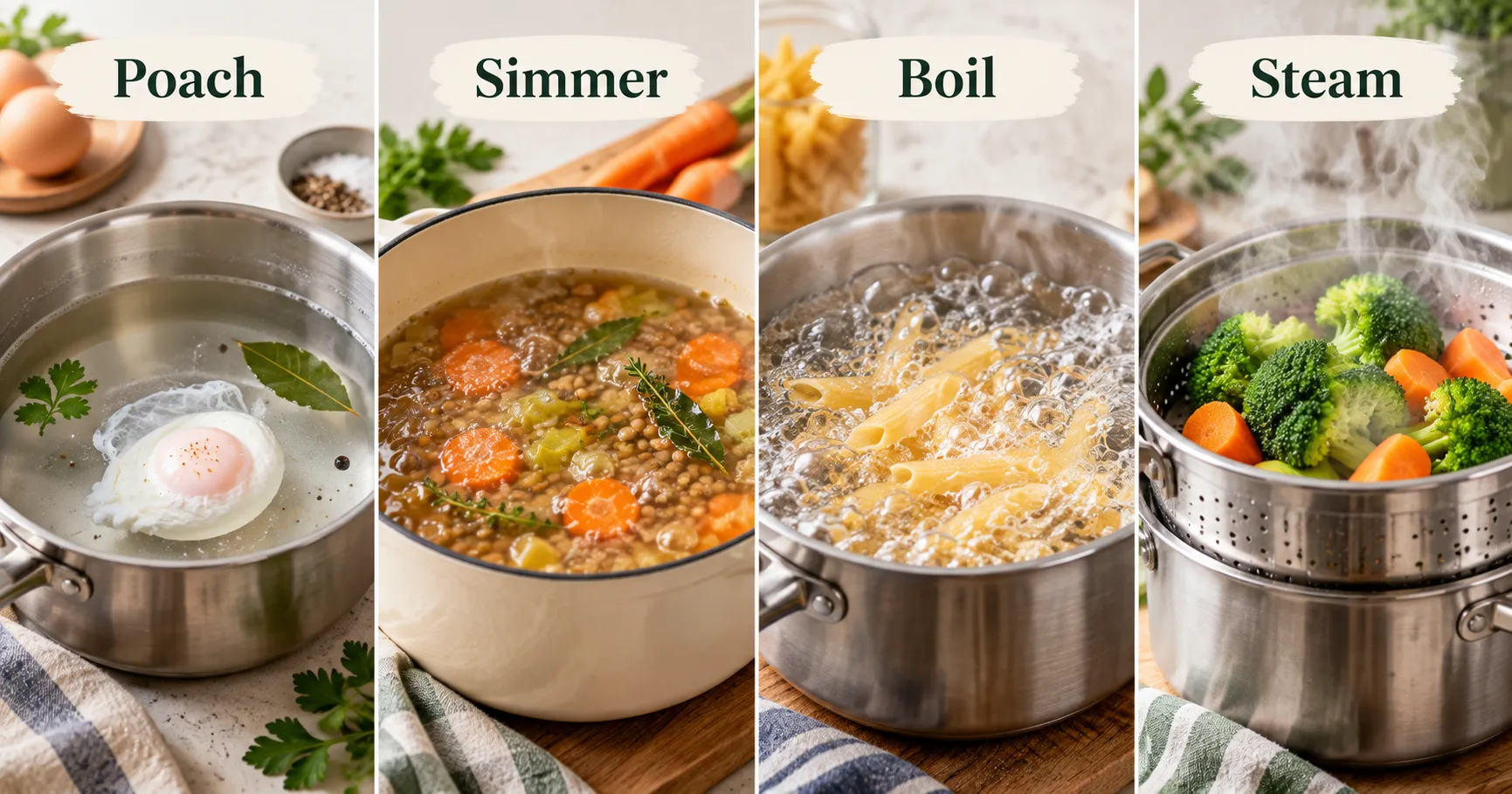
Boiling vs Simmering vs Poaching vs Steaming: What's the Difference?
Compare boiling, simmering, poaching and steaming by heat, bubbling, food contact and the kinds of ingredients each cooking method suits.
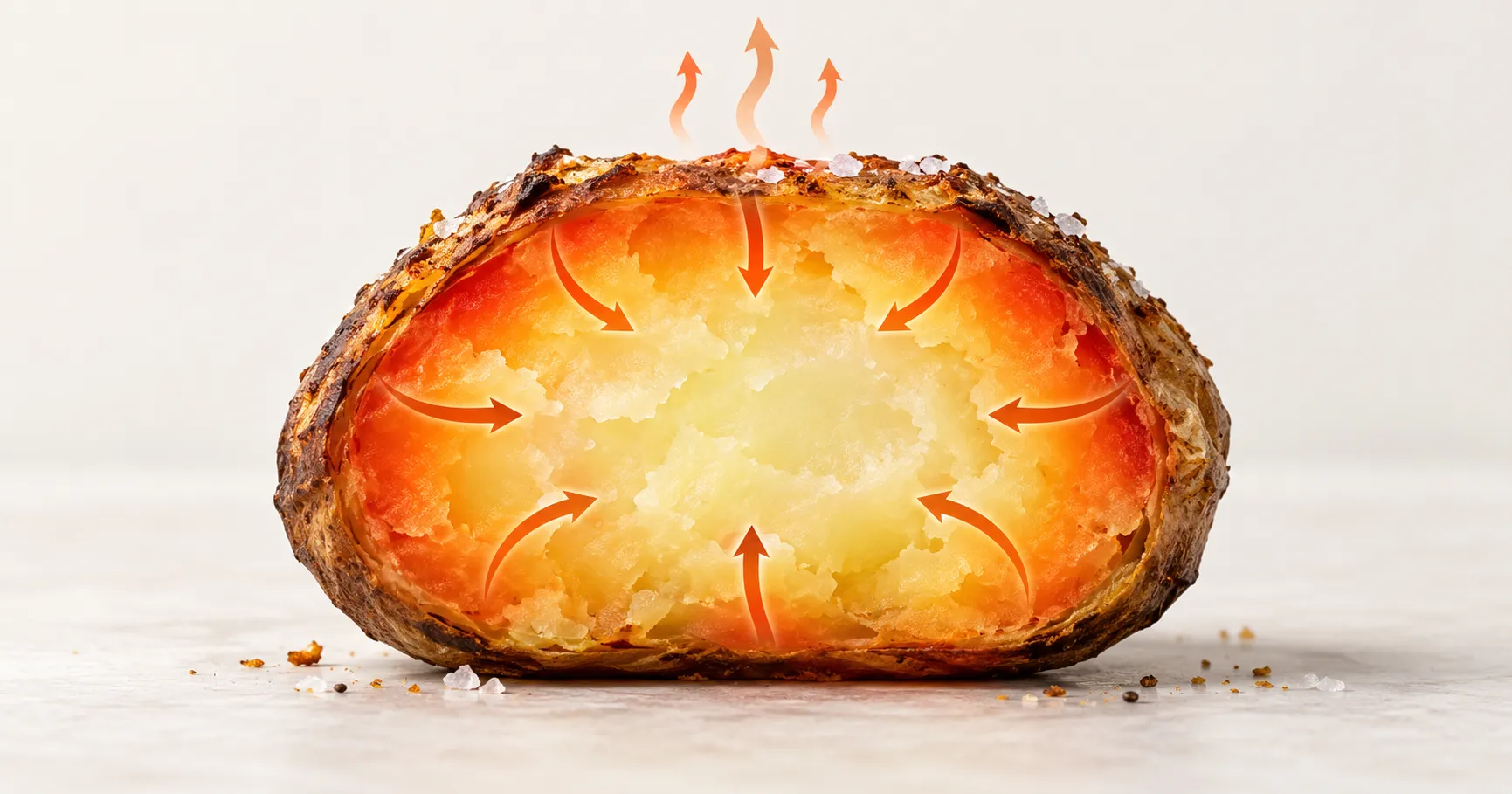
Why Food Keeps Cooking After You Take It Off the Heat
Food does not stop changing temperature the moment it leaves the oven or pan. Learn how carryover cooking works, why the centre may continue heating and which foods show the effect most clearly.
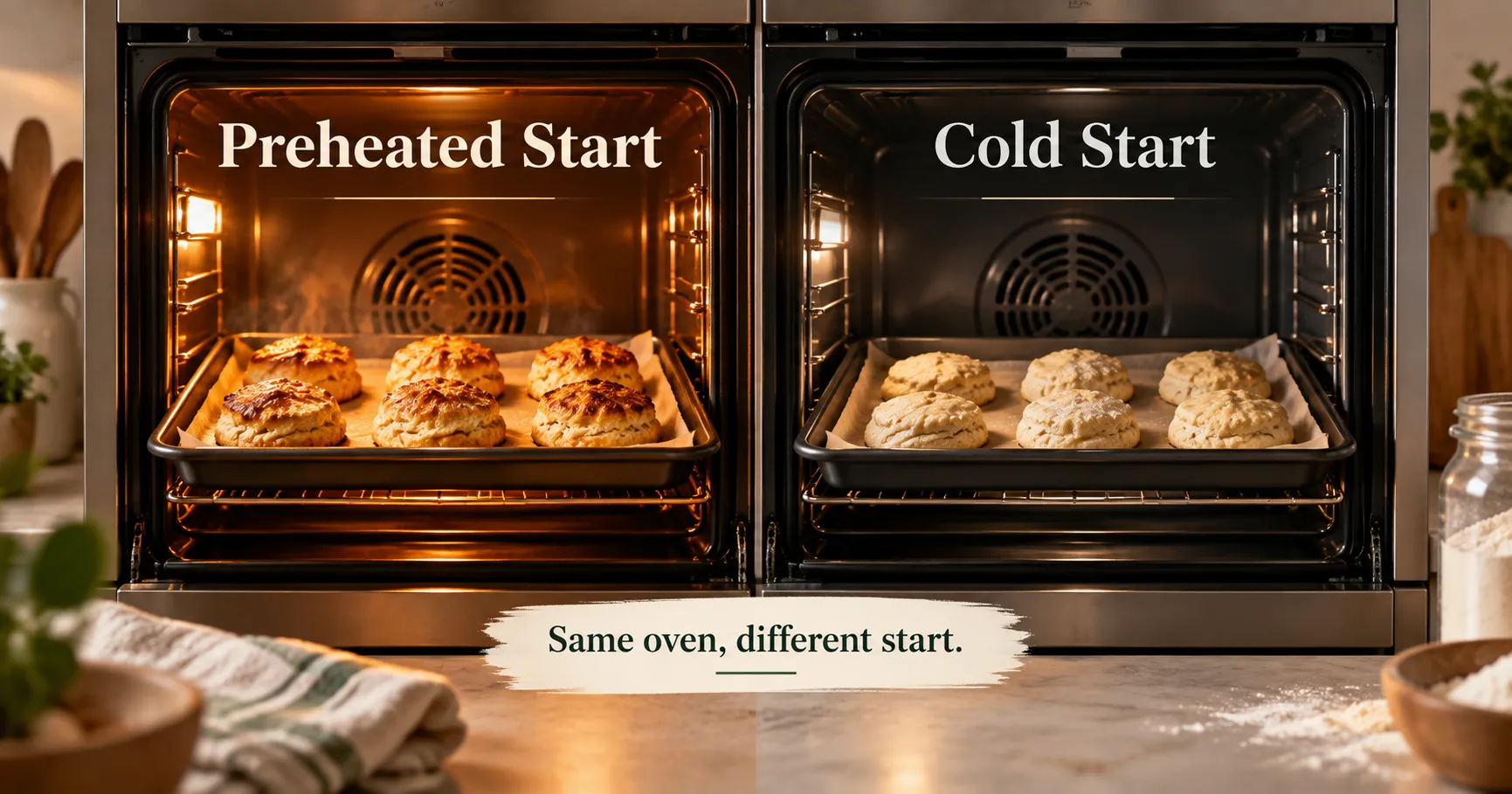
Why Oven Preheating Matters—and When It Doesn't
Learn what oven preheating actually changes, which foods depend on a hot start and why some recipes can successfully begin in a cold oven.
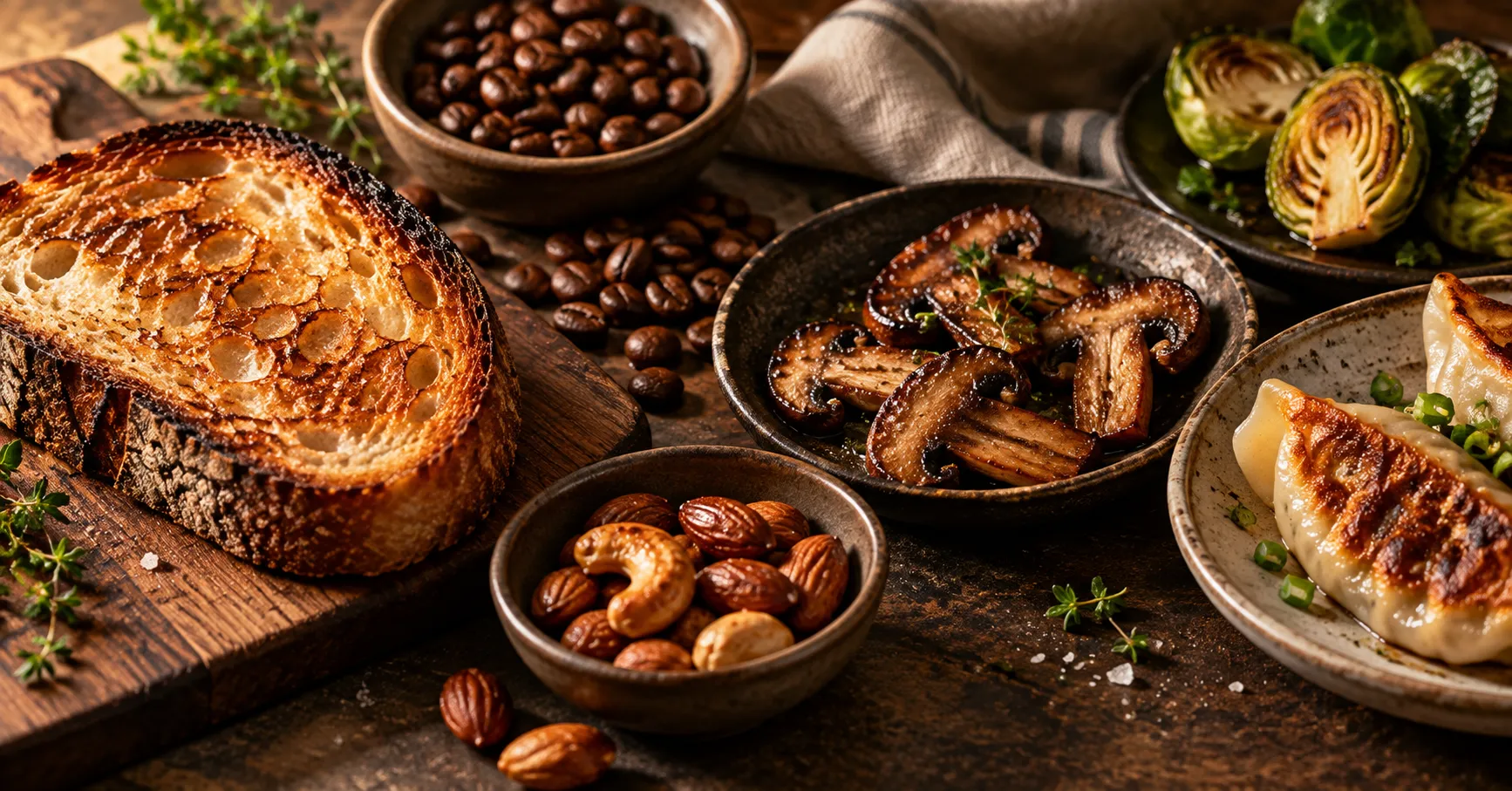
What Is the Maillard Reaction and Why Does It Make Food Taste Better?
Learn how the Maillard reaction creates browned colour and complex aromas, what controls it, why wet foods brown poorly and how it differs from caramelisation.
How Heat Cooks Food: Conduction, Convection and Radiation Explained
Understand how conduction, convection and radiation move heat into food, how that heat travels toward the centre, and why pans, ovens, grills, boiling water and other cooking methods produce different results.